
From summer cuttings to Christmas colour
By the time a poinsettia reaches the shop shelf, it has had months of care. Follow its journey through a typical British nursery, from a young plant in summer to the colourful centrepiece we know at Christmas.
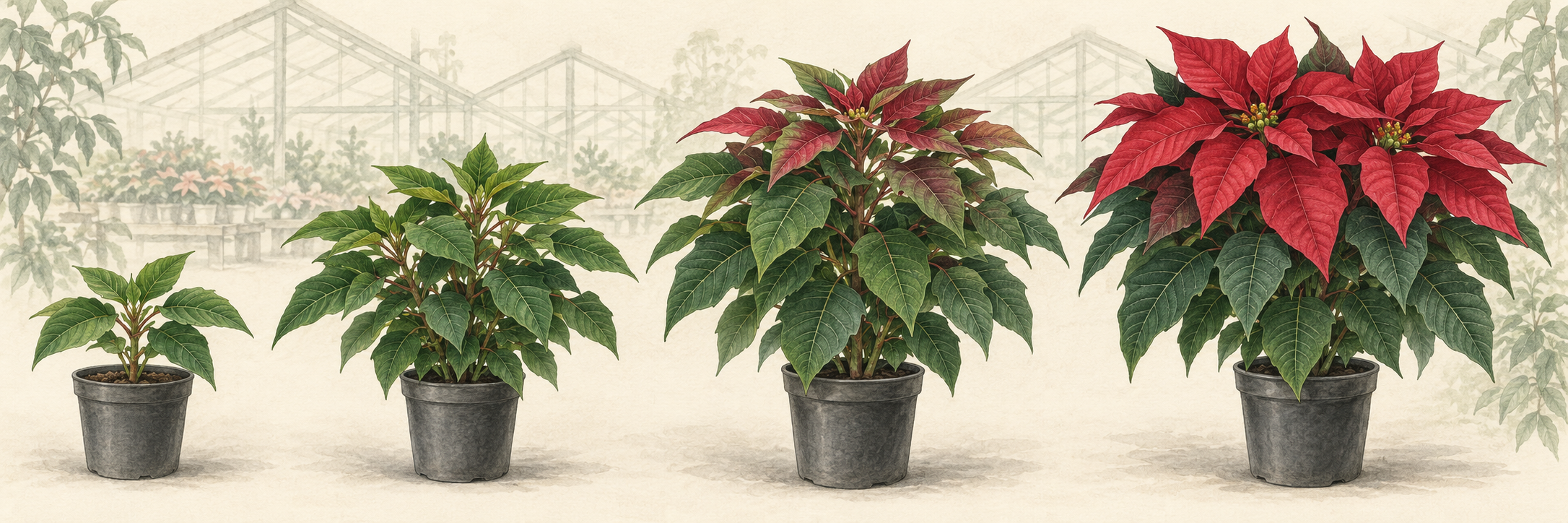
How a poinsettia takes shape
Growers manage water, feeding, temperature, light and spacing throughout the crop. Each stage helps to produce a healthy, well-shaped plant with lasting colour.
This is a typical timeline, rather than a fixed schedule. Stages overlap and timing varies with the variety, pot size, growing conditions and intended sale date. Week numbers refer to weeks of the calendar year; months are approximate.
-
July – early August Weeks 27–31
1. Potting the young plants
Young poinsettias raised from cuttings are planted into their final pots. Growers water them in carefully and keep them warm while the roots establish.
The pots are initially placed close together. The starting date depends on the variety and the size of plant the grower wants to produce.
-
July – August Weeks 29–33
2. Encouraging a fuller plant
Around 10–14 days after potting, the growing tip is removed. This process, called pinching, encourages side shoots to develop instead of a single main stem.
It is an important step in creating a full, well-branched plant. Growers adjust the pinch to suit the variety and pot size, with careful hygiene to avoid spreading pests and diseases between plants.
-
August – September Weeks 31–38
3. Building roots, shoots and leaves
New side shoots develop and the plant begins to take shape. Growers carefully balance watering, feeding, temperature and light to build healthy roots and a strong, even framework.
Regular measurements help them compare growth with the target size. Feeding and irrigation are adjusted to suit the growing media, while crop checks help identify pest or disease problems early.
-
August – September Weeks 33–38
4. Making room to grow
As the leaves begin to meet, the pots are moved further apart. This gives the plants better access to light and air and helps them develop a balanced shape.
On a commercial nursery, spacing can mean moving thousands of pots by hand or with specialist equipment. Some crops are spaced more than once as they grow.
-
Late September Around week 39
5. Longer nights trigger a change
Poinsettias are short-day plants. As the nights become longer, the plant receives the signal to begin developing its flowers and colourful bracts.
Growers can adjust this timing. Blackout screens extend the dark period to bring development forward, while additional lighting interrupts the long night and can delay it. Unwanted light at night can also disrupt the crop’s response.
-
October Weeks 40–43
6. The flowers begin to develop
The plant may still look mostly green, but changes are taking place at the shoot tips. The small flower structures that will sit at the centre of the coloured bracts begin to develop.
Temperature remains particularly important during this stage. Growers continue to monitor moisture, height and crop health to keep development on track.
-
Late October – November Weeks 43–46
7. Christmas colour appears
The upper leaves, called bracts, change from green to the colour of the variety. Red is familiar, but poinsettias also come in pink, cream, white and patterned forms.
As the colour develops, growers assess branching, plant size, roots and overall condition. Early varieties or crops grown under blackout screens may already be reaching shops while later crops continue to develop.
-
November – December Weeks 45–51
8. Ready for Christmas
The finished poinsettias are sleeved, packed and carefully transported to retailers. Crops are timed to supply fresh plants throughout the selling season.
Behind each plant are months of planning, monitoring and skilled work, all aimed at producing a poinsettia that arrives in good condition and brings lasting colour to the home.
More than a Christmas flower
The colour comes from leaves
The showy parts are bracts: modified leaves surrounding the flowers. The tiny true flowers are grouped within structures called cyathia at the centre of the display.
There is more than red
Varieties include cream, pink, salmon, burgundy and apricot shades, as well as speckled, marbled and two-tone bracts.
Christmas starts in summer
A finished poinsettia is the result of months of growing. Its shape and colour depend on careful management long before the festive season begins.
Keep your poinsettia looking its best
- Protect it from the cold on the journey home.
- Choose a bright position with indirect light, away from cold draughts and direct heat from radiators.
- Water when the surface of the compost begins to feel dry.
- Allow excess water to drain away and never leave the pot standing in water.